
When the Monsoon Meets Tradition: Ashadam at PURE Abhyasa

The monsoon brings a different kind of beauty to the forest communities around PURE Abhyasa. The earth turns fresh, the trees become greener, and everyday surroundings begin to feel new again. During Ashadam, this season also brings with it traditions that have been carried forward for generations, and this year our children had the opportunity to experience one of them in the most natural way.
The activity began with something simple: fresh Gorintaku leaves.

A Morning Rooted in Nature
For children at PURE Abhyasa, nature is not separate from learning. The forest, the changing seasons, the plants around them, and the traditions of their communities all become part of how they understand the world.
On this special Ashadam day, the children stepped outside together to gather fresh Gorintaku leaves from their surroundings. What looked like a simple activity quickly became a joyful experience, as the children searched among the greenery, collected the leaves carefully, and proudly brought them back to prepare.
There was excitement in the smallest moments. Some children were curious about which leaves to pick, while others eagerly carried the branches and helped their friends. It was a natural form of learning, where participation came before explanation and where the environment itself became part of the lesson.

From Fresh Leaves to a Shared Tradition
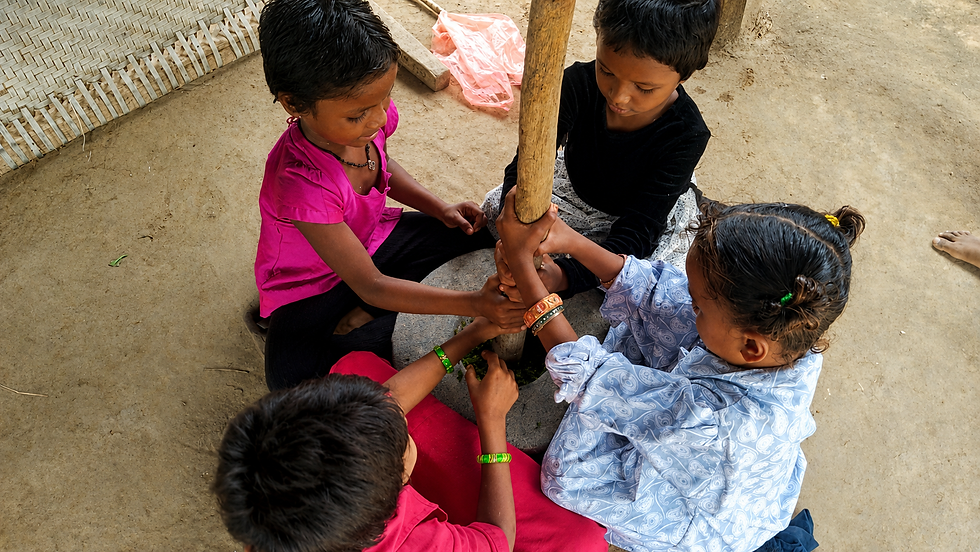
Once the leaves were collected, the children gathered together to prepare them in the traditional way. Using a stone grinder, they watched as the fresh leaves slowly changed into the natural paste they would later apply to their hands.
The process itself became a shared experience. The children took turns, helped one another, watched closely, and learned through participation. There was no formal lesson plan or complicated explanation. Instead, there was a circle of children, a traditional grinding stone, fresh leaves, and the simple excitement of doing something together.
These moments are important because they allow children to understand culture through experience. They are not only told that a tradition exists. They see how it is prepared, they participate in the process, and they begin to understand why such practices continue to hold meaning across generations.
From Leaves to Little Hands
After the Gorintaku was prepared, the moment the children had been waiting for finally arrived. They sat together and began applying the fresh paste to one another’s hands, carefully covering their palms and fingers while watching the natural colour begin to take shape.
The room quickly filled with curiosity and laughter. Children compared their hands, helped their friends, and waited patiently to see how the colour would develop. For them, it was a fun activity, but it was also something more. It was a moment of belonging, friendship, and cultural connection.
Through this simple experience, the children were not only celebrating Ashadam. They were taking part in a tradition that many families have known for generations, and in doing so, they were creating their own memory of it.

When Culture Becomes Part of Learning
At PURE Abhyasa, we believe children learn deeply when lessons connect with the life around them. Cultural activities, seasonal experiences, nature-based learning, and community traditions can all become meaningful opportunities for children to observe, participate, and grow.
The Ashadam Gorintaku activity brought many small lessons together naturally. The children explored the plants around them, worked as a group, practiced patience, learned a traditional process, and experienced the joy of sharing something with friends.
This kind of learning stays with a child because it is connected to a real moment. It is not simply something they hear about and later forget. It becomes a memory they can see, feel, and remember.
Where the Forest Becomes a Classroom
The surroundings of PURE Abhyasa offer many opportunities for learning beyond the walls of a classroom. During the monsoon, children notice changes in the soil, plants, water, and weather, while seasonal traditions add another layer of meaning to what they experience.
For children growing up in remote forest communities, these surroundings are familiar, but activities like this help them look at that familiar world with new curiosity. A plant becomes more than a plant. It becomes part of a tradition. A seasonal celebration becomes more than an event. It becomes a learning experience.
This is what makes such moments meaningful. Education becomes connected to the child’s own environment, rather than feeling separate from it.
Passing a Tradition Forward
A tradition continues when it is shared, practiced, and remembered.
For these children, a few fresh leaves became much more than an activity. They became part of a morning spent exploring, learning, helping one another, and celebrating something that connects the present with the past.
The children may remember the green leaves they gathered, the sound of the grinding stone, the excitement of applying Gorintaku, or the way they proudly held up their hands afterward. Those memories may seem small, but they are often the moments that stay with children for years.
Through experiences like these, culture is not simply preserved. It is carried forward naturally through childhood.
A Season Felt, A Tradition Shared
By the end of the activity, the children proudly showed their Gorintaku-covered hands, each one carrying a small reminder of the day they had spent together.
The monsoon had brought greenery to the forests, but it had also created an opportunity for children to connect with nature, friendship, and tradition in a very simple and beautiful way.

At PURE Abhyasa, we believe education should help children understand not only what is in a textbook, but also the world they belong to. When learning is connected to nature, culture, community, and lived experience, children are given the opportunity to grow with curiosity, confidence, and a stronger sense of belonging.
This Ashadam celebration reminded us that meaningful learning can happen in many places. It can happen inside a classroom, beneath a tree, beside a traditional grinding stone, or simply in a circle of children discovering something together.
At PURE, we continue to create opportunities that make childhood meaningful while helping children learn, grow, and move toward a brighter future.
Educate • Empower • Excel
PURE – People for Urban and Rural Education
PURE India Trust
Support PURE Abhyasa and help us create more meaningful learning experiences for children in remote and underserved communities. Together, we can help children learn with dignity, joy, confidence, and a deeper connection to the world around them.


Comments